Interbank Rate vs Bank Rate: A Simple Explanation That Could Save You $500 a Year
Interbank Rate vs Bank Rate: A Simple Explanation That Could Save You $500 a Year
.jpg "Interbank Rate vs Bank Rate: A Simple Explanation That Could Save You $500 a Year")
There are two exchange rates that exist every time you convert money: the real one, and the one your bank gives you. The gap between them is where hundreds of dollars disappear every year — quietly, legally, and almost entirely unnoticed.
You have been sending money abroad for years. Maybe you send $500 home every month, or you buy things online in other currencies, or you travel a few times a year. Every single one of those transactions involved two exchange rates: the real one, and the one you were actually given. The difference between them has been silently costing you money the entire time. This article explains both rates in plain English — what they are, why they differ, and the one habit that could save you $500 or more every year starting today.
- What Is the Interbank Rate? (The Real Rate)
- What Is the Bank Rate? (The Rate You Actually Get)
- The Gap Between Them — And What It Costs You
- Why Do Banks Mark Up the Rate?
- Real Numbers: How Much Are You Losing?
- How to Find the Interbank Rate for Free
- How to Get Closer to the Interbank Rate
- The $500 Saving Formula — Step by Step
- Frequently Asked Questions
Let us start with a moment you have almost certainly experienced. You are at the airport, or on the phone with your bank, or sitting in front of a wire transfer form. You checked the exchange rate on Google five minutes ago. Now the bank is showing you a different number. You assume it is just the way things work and accept it. That assumption has probably cost you more money than any other financial habit you have.
The reason for the difference is not random. It is structural, deliberate, and entirely legal. Understanding it takes about ten minutes — and knowing it will change how you handle every currency transaction for the rest of your life. Let us go through it together, using real numbers, no jargon, and a direct answer to the question: how much is this actually costing you?
What Is the Interbank Rate? The Real Exchange Rate
Every day, banks around the world trade enormous amounts of currency with each other. JPMorgan sells euros to Deutsche Bank. HSBC buys yen from Citibank. These transactions happen in volumes of tens or hundreds of millions of dollars, through electronic platforms like EBS and LSEG (formerly Refinitiv), across a market that trades 24 hours a day from Sunday evening to Friday afternoon.
The price at which these banks trade with each other is called the interbank rate. It is also called the mid-market rate, the spot rate, or simply "the real exchange rate." It sits exactly at the midpoint between what buyers are willing to pay for a currency and what sellers are willing to accept — the precise centre of the market at any given second.
This rate belongs to no one institution. It is not set by any government or regulator. It is the collective, real-time verdict of the world's largest financial market — the global forex market, which processes over $7.5 trillion in daily transactions according to the Bank for International Settlements. It is the fairest price of money that exists.
Here is the important bit: you can see this rate for free, right now. Type any currency pair into Google — "USD to INR," "GBP to EUR," "AUD to USD" — and the number that comes back is the interbank rate (or more precisely, the mid-market rate, which is the publicly available approximation of it). It is also displayed live, for over 150 currency pairs, at FX Rate Live.
What Is the Bank Rate? The Rate You Actually Get
When you walk into a bank and ask to send $1,000 to India, or buy euros for a holiday, or pay an overseas supplier — your bank does not give you the interbank rate. It gives you its own rate.
The bank's rate is always worse than the interbank rate. Not slightly worse. Meaningfully worse. According to Wise's analysis, banks on average mark up the exchange rate by 4% to 6%. Currensea's data shows an average bank markup of over 3.25%. Airwallex puts it at 4% to 6%. The exact figure varies by bank, currency pair, and the size of your transaction — but the direction is always the same. The bank's rate is always worse for you.
This adjusted rate has various names depending on the context. Your bank might call it the "card rate," the "prevailing rate," the "TT Selling Rate" (for wire transfers), or simply "today's exchange rate." Whatever it is called, the mechanics are identical: the bank takes the interbank rate, adds its profit margin, and presents the result to you as the exchange rate. No separate disclosure. No line item that says "fee: 3%." Just a quietly adjusted number.
What banks charge each other
(Feb 20, 2026 real example)
The example above is real. On February 20, 2026, the interbank USD/INR rate was ₹90.73. HDFC Bank's TT Selling Rate was ₹92.54 — a gap of ₹1.81 per dollar, or approximately 2% on that day. Indian Overseas Bank quoted ₹91.30 on the same day — a smaller gap, but still above the real rate. Every bank builds in this margin. Every single transaction carries it. Almost no customer ever notices.
The Gap Between Them — And What It Costs You
The gap between the interbank rate and the bank rate has a name: the FX spread or exchange rate markup. It is not a fee. It does not appear on your receipt. It is simply the difference between what the rate was and what you were offered — and in most countries, banks are under no legal obligation to disclose it separately.
Here is a concrete example of how the math works. Suppose the interbank rate for USD to INR is ₹90.73. You want to convert ₹10,00,000 to US dollars. At the real rate, you would receive $11,019. At HDFC Bank's TT Selling Rate of ₹92.54, you receive $10,806. The difference — $213 — simply stays with the bank. This real calculation from Vested Finance uses numbers directly from bank rate sheets — it is not hypothetical.
Amount being converted: ₹10,00,000
Interbank rate (real): ₹90.73 / USD → You receive $11,019
HDFC TT Selling Rate: ₹92.54 / USD → You receive $10,806
Silent loss: $213 — embedded in the rate, invisible on your receipt
Add HDFC's flat wire fee (₹500–₹1,000 + GST) and the total loss exceeds $225 on a single transfer.
Live rate check: See today's real USD/INR mid-market rate at FX Rate Live
Why Do Banks Mark Up the Rate? The Honest Explanation
Banks are not marking up the rate out of pure malice. There are legitimate reasons the markup exists — and understanding them helps you evaluate when the markup is reasonable and when it is excessive.
Reason 1 — Banks Do Not Access the Market at Zero Cost Either
Even large banks do not buy and sell currencies at exactly the interbank rate. They access the market through dealing desks and liquidity providers, and there is always a small bid-ask spread at the institutional level. The bank's first job is recovering that wholesale cost.
Reason 2 — Currency Price Risk
Between the time you request a transfer and the time it is actually executed, the exchange rate moves. The bank takes on that price risk — the guarantee that you will receive the rate quoted to you regardless of what happens to the market in the next few hours. That risk is worth something, and the markup partly compensates for it.
Reason 3 — Operating Costs
International wire transfers require compliance teams, SWIFT network fees, correspondent bank relationships, documentation processing, and customer service. Banks embed these costs into the rate rather than charging them as separate items.
Reason 4 — Profit
Ultimately, the fourth reason is the one that accounts for most of the markup. Research by Airwallex found that 44% of businesses report frustration with poor exchange rates on international payments. The markup is how banks make significant revenue from FX — and they are able to do so because most customers never compare the rate they are given to the rate that actually exists.
Real Numbers: How Much Are You Actually Losing?
Abstract percentages are hard to feel. Actual dollars are not. Here is what a typical bank markup looks like across different transaction amounts and frequencies.
| Transaction | Amount | Bank Cost (4% markup) | Specialist Service (0.5%) | Annual Saving |
|---|---|---|---|---|
| Monthly remittance | $500/month | $240/year | $30/year | $210/year |
| Monthly remittance | $1,000/month | $480/year | $60/year | $420/year |
| Monthly remittance | $2,000/month | $960/year | $120/year | $840/year |
| One-off large transfer | $10,000 | $400 + fees | $50 + fees | $350 per transfer |
| Property purchase abroad | $250,000 | $10,000 | $1,250 | $8,750 on one deal |
*Bank cost based on 4% average markup (conservative — many banks charge more). Specialist service cost based on 0.5% fee. Does not include flat fees. Always verify current rates at fxratelive.in.
The $500 figure in the title of this article is not hypothetical — it is based on a very ordinary usage pattern. Someone sending $1,000 home per month through a bank paying a 4% spread is losing $480 every year. Switch to a service with a 0.5% effective rate and the annual saving is over $420. Add flat fee savings on top and you are comfortably past $500. On property transactions of £250,000, Regency FX estimates savings of up to £5,000 compared to using a typical high-street bank.
How to Find the Interbank Rate for Free — Right Now
You do not need a Bloomberg terminal or a bank account to see the interbank rate. It is publicly visible, updated in real time, and costs nothing to check. Here are three ways to find it instantly.
Method 1 — Google Search
Type any currency pair into Google: "USD to INR," "EUR to GBP," "AUD to JPY." The number that appears at the top of the results is the mid-market rate — the closest publicly available approximation of the interbank rate. It updates continuously throughout the trading day.
Method 2 — FX Rate Live
FX Rate Live displays live mid-market rates for over 150 currency pairs, updated every few minutes from interbank data sources. It is free, requires no signup, and covers all major corridors including the ones most relevant to South Asian, Southeast Asian, and Middle Eastern remittance senders. This is the benchmark you should use before every currency transaction.
Method 3 — XE.com or Google Finance
Both XE.com and Google Finance display mid-market rates sourced from financial data providers. They are reliable references for checking the real rate before comparing what a bank or transfer service quotes you.
2. Go to your bank or transfer service — note their quoted rate
3. Calculate: (mid-market rate − bank rate) ÷ mid-market rate × 100 = their % markup
4. Any markup above 1% should prompt you to compare at least one other service
5. Any markup above 3% means you are almost certainly overpaying significantly
150+ currency pairs. Live mid-market data. No signup needed.
How to Get Closer to the Interbank Rate as an Ordinary Person
You will never get the exact interbank rate as a retail customer — that market is reserved for banks trading hundreds of millions of dollars at a time. But you can get remarkably close. The gap between what is available to you and the true interbank rate has shrunk dramatically over the past decade, thanks to competition from specialist digital transfer services.
Specialist Digital Transfer Services
Services that use the mid-market rate as their base and charge only a transparent flat or percentage fee on top are the closest thing most people will ever get to the interbank rate. Wise uses the exact mid-market rate with zero markup, charging only a transparent fee of 0.33%–0.5% on major currency pairs. This is a fundamentally different model from banks — you see the rate, you see the fee, you see what the recipient gets, before you confirm anything.
Negotiate With Your Bank for Large Transfers
If you are making a transfer of $50,000 or more, your bank may be willing to negotiate the exchange rate. Statrys notes that the interbank rate can be used as leverage when negotiating better deals on large transfers. Most retail customers never try to negotiate — and banks rely on that. Knowing the real rate from FX Rate Live gives you a concrete reference point for the conversation.
Use the Right Payment Method
Not all payment methods carry the same markup. Credit cards typically carry the highest FX charges — a card issuer's conversion fee plus the bank's margin can easily add 5%–7% total. Debit cards are usually better. Bank-to-bank ACH transfers through specialist services are usually the cheapest of all. Wise's own data shows that paying by bank debit (ACH) is typically the cheapest way to fund an international transfer for amounts under $3,750.
The $500 Saving Formula — Your Action Plan
Here is the practical framework. This is not complicated. It requires no financial expertise and takes about five minutes the first time you do it.
Monthly transfer: $1,000 • Current bank markup: 4% • Annual cost in markup: $480
Alternative service markup: 0.5% • Annual cost: $60
Annual saving: $420 in FX markup alone
Add flat fee savings (~$20 x 12 months) = $240 more
Total annual saving: ~$660
Start by checking the real rate at fxratelive.in before your very next transfer.
The Bottom Line
The interbank rate and the bank rate are not two names for the same thing. They are two very different numbers — one real, one marked up — and the gap between them has been quietly costing you money on every international transaction you have ever made.
The good news is that fixing this habit takes less than a minute. Check the real mid-market rate at FX Rate Live before any currency transaction. Compare it to what your bank or service is offering. If the gap is more than 1%, look at alternatives. That single habit — applied consistently — is worth $500 or more per year for most regular senders, and far more for anyone making large transfers.
Banks built their FX business on the assumption that you would never check. Now you know how to check. The rest is just arithmetic.
Frequently Asked Questions

Wise vs Bank Transfer: Which One Actually Saves You More?
Wise vs Bank Transfer: Which One Actually Saves You More?
Wise Review Bank Wire Transfer Remittance Comparison FX Spread Mid-Market Rate International Transfer

Your bank has been sending money internationally for decades. It has a branch on every high street, an app on your phone, and your complete trust. Wise launched in 2011 with a single bold claim: your bank is overcharging you. Thirteen years later, with over 13 million customers and a London Stock Exchange listing, Wise has proved that claim with hard numbers. This is the definitive comparison — no hype, no affiliate spin, just actual costs on real corridors. Check the live mid-market rate first at FX Rate Live, then let the numbers decide.
The question "Wise or bank?" sounds simple. The answer is not. It depends on how much you are sending, which currency corridor you are using, how urgently the money needs to arrive, and — most critically — whether you are comparing the total cost or just the advertised fee. Banks are very good at making the advertised fee look competitive while hiding the real cost inside the exchange rate. Wise turns that model upside down: one transparent fee, the real exchange rate, nothing buried.
Before we get into numbers, one tool you must use before any transfer: FX Rate Live. It shows you the live mid-market rate — the real interbank rate — for 150+ currency pairs. That number is your benchmark. Any service deviating significantly from it is charging you the difference as a hidden fee.
The Core Difference: How Each One Makes Money
To compare Wise and banks fairly, you need to understand how each earns revenue from your transfer. They operate on completely different business models.
How Banks Make Money on Transfers
When you wire money internationally through your bank, the bank earns from two sources simultaneously. First, the flat transfer fee — $25 to $50 at most US banks, ₹500 to ₹1,000 at Indian banks. This is visible and disclosed. Second — and far more lucrative — is the exchange rate markup. The bank takes the mid-market rate and adjusts it by 2% to 5% before presenting it to you. That markup is never shown as a separate line item. It is simply embedded in "the exchange rate."
On top of all this, your transfer may pass through one or more correspondent banks via the SWIFT network — each of which can deduct $10 to $30 from your transfer amount with no prior notice.
How Wise Makes Money on Transfers
Wise charges a single transparent fee shown before you confirm — typically 0.33% to 0.5% variable for major currency pairs, plus a small fixed fee around $7. It applies zero markup to the exchange rate. The rate you see in Wise is the same mid-market rate you can verify right now at FX Rate Live. Wise also avoids SWIFT for most transfers, using local bank accounts in each country — faster and cheaper.
Real Cost Comparison: $500, $1,000 and $5,000 Transfers
The figures below are based on typical costs for the USD to INR corridor. Always verify exact amounts on the day of transfer using fxratelive.in as your benchmark.
| Transfer Amount | Via Major US Bank | Via Wise | Saving with Wise |
|---|---|---|---|
| $500 | ~$35–$50 total cost | ~$5–$8 total cost | $27–$45 |
| $1,000 | ~$55–$80 total cost | ~$7–$12 total cost | $43–$68 |
| $5,000 | ~$175–$290 total cost | ~$22–$32 total cost | $153–$258 |
| $10,000 | ~$325–$550 total cost | ~$40–$55 total cost | $285–$495 |
Total cost includes exchange rate markup + flat transfer fee + estimated correspondent bank fee. Bank figures based on typical 3–5% FX spread. Wise figures based on 0.33–0.5% variable fee + ~$7 fixed fee. Always verify before transferring.
Mid-market rate: check live at fxratelive.in
Via Chase (3.5% FX spread + $35 flat fee + $20 correspondent fee):
Loses approximately $290–$310 to hidden costs
Via Wise (0.4% fee + $7 fixed, zero FX markup):
Loses only approximately $27–$32 total
Typical saving with Wise: $260–$280 on a single $5,000 transfer
Exchange Rate: Who Gets Closer to the Real Rate?
This is the heart of the comparison. The exchange rate determines more of your transfer cost than any flat fee.
Wise uses the mid-market rate with zero markup. The rate displayed in Wise's calculator is the same rate you see when you check FX Rate Live. The fee is separated out clearly — you see the rate, you see the fee, you see exactly what the recipient gets before confirming.
Banks operate differently. Major banks typically add a markup of 2%–5% to the mid-market rate for international transfers. The markup is folded invisibly into the exchange rate they quote you — and if you do not check the real rate first, you will never know how much was taken.
With a bank: You see a quoted rate. You do not know the mid-market rate. You do not know the spread. You may not know correspondent fees until the money arrives short.
With Wise: You see the mid-market rate. You see the exact fee. You see the total recipient amount. You confirm only when satisfied. No surprises.
→ Check the real mid-market rate now and compare any quote against it
Speed: How Long Does Each Take?
Bank international wire transfers travel through the SWIFT network — a messaging system routing money through correspondent banks. Typically 1 to 5 business days for common corridors, up to 7 days for less common routes.
Wise bypasses SWIFT for most transfers by using local bank accounts in each country. The result: over 60% of Wise transfers arrive instantly, 80% within one hour, and 95% within 24 hours.
| Corridor | Bank (SWIFT) Speed | Wise Speed |
|---|---|---|
| USD → INR (US to India) | 2–5 business days | Instant to 24 hours |
| USD → GBP (US to UK) | 1–3 business days | Instant to a few hours |
| USD → CAD (US to Canada) | 1–3 business days | Instant to 24 hours |
| USD → PKR (US to Pakistan) | 3–7 business days | 24–48 hours |
| GBP → EUR (UK to Europe) | 1–2 business days | Instant |
Safety: Is Wise as Safe as a Bank?
Wise is regulated by the Financial Conduct Authority (FCA) in the UK, FinCEN in the US, and equivalent regulators in every country it operates. It is publicly listed on the London Stock Exchange and serves over 13 million customers. Customer funds are held in segregated accounts at major tier-1 banks, entirely separate from Wise's own operating capital.
Corridor-by-Corridor Breakdown
Cost and speed vary significantly by corridor. Always verify current rates at FX Rate Live before any transfer.
USD → INR (USA to India)
One of the world's highest-volume remittance corridors. Banks charge 2.5%–4% FX spread plus flat fees. Wise charges ~0.4% with zero markup. On a $1,000 transfer, the saving is typically $40–$65. See today's exact mid-market rate at our USD to INR guide.
GBP → USD (UK to USA)
A high-liquidity corridor where Wise is particularly strong. Variable fee from 0.33% with no FX markup. UK banks typically add 2%–3.5% spread. Full comparison in our GBP to USD complete guide.
USD → CAD (USA to Canada)
Banks apply 1.5%–3% FX spread. Wise applies near-zero markup. The difference on a $5,000 transfer can be $75–$150. See our USD to CAD complete guide.
USD → PKR (USA to Pakistan)
Historically wide bank spreads — sometimes 4%–6% — due to currency controls and limited correspondent relationships. For context, see our USD to PKR analysis.
When Your Bank Is Actually Better Than Wise
Very large transfers with negotiated rates. If you are sending $50,000 or more, some banks — especially for premium or private banking customers — will negotiate exchange rates. At that scale, a relationship-driven rate can narrow the gap meaningfully.
Countries Wise does not support. Wise operates in 160+ countries but there are still corridors where it has limited functionality. For these, a bank wire may be the only realistic option.
Cash pickup requirement. If the recipient needs to collect cash at a physical location, Wise cannot help. Western Union, Remitly, and traditional bank drafts still serve this need.
Trade finance and business banking. For businesses needing letters of credit, multi-currency credit facilities, or integrated trade finance, a full-service bank remains the more complete solution.
Compare any quote — bank or Wise — against the live interbank rate. Free, instant, 150+ currencies.
The Verdict: Head-to-Head Summary
- You want the real exchange rate
- Transparency and upfront costs matter
- You need the money to arrive fast
- You transfer regularly
- You are sending under $50,000
- The corridor is supported by Wise
- Recipient has a bank account
- Recipient needs cash pickup
- Destination not supported by Wise
- Premium customer with negotiated rates
- Transfer is very large (>$50,000)
- You need trade finance alongside payment
For the vast majority of people — individuals sending money home, freelancers receiving international payments, small businesses settling invoices — Wise is cheaper, faster, and more transparent than a bank wire in almost every scenario. Check the real rate at FX Rate Live, get a Wise quote, and compare. You will not need a spreadsheet to see which wins.
Bottom Line
Banks built their international transfer business in an era when customers had no way to verify the real exchange rate. That era is over. The mid-market rate is publicly available in real time at FX Rate Live. Specialist services like Wise have made the true cost of a fair transfer visible for anyone willing to look.
Wise is not perfect for every situation. But for standard bank-to-bank international transfers, it is cheaper by a margin that compounds into hundreds or thousands of dollars over time. The bank's transfer business was built on your not knowing this. Now you do.
Check the rate. Compare the cost. Then decide. That 45-second habit is worth more than any loyalty programme your bank has ever offered you.
Frequently Asked Questions
Why Your Bank Charges You More Than Google's Exchange Rate — And How to Stop It
Why Your Bank Charges You More Than Google's Exchange Rate — And How to Stop It
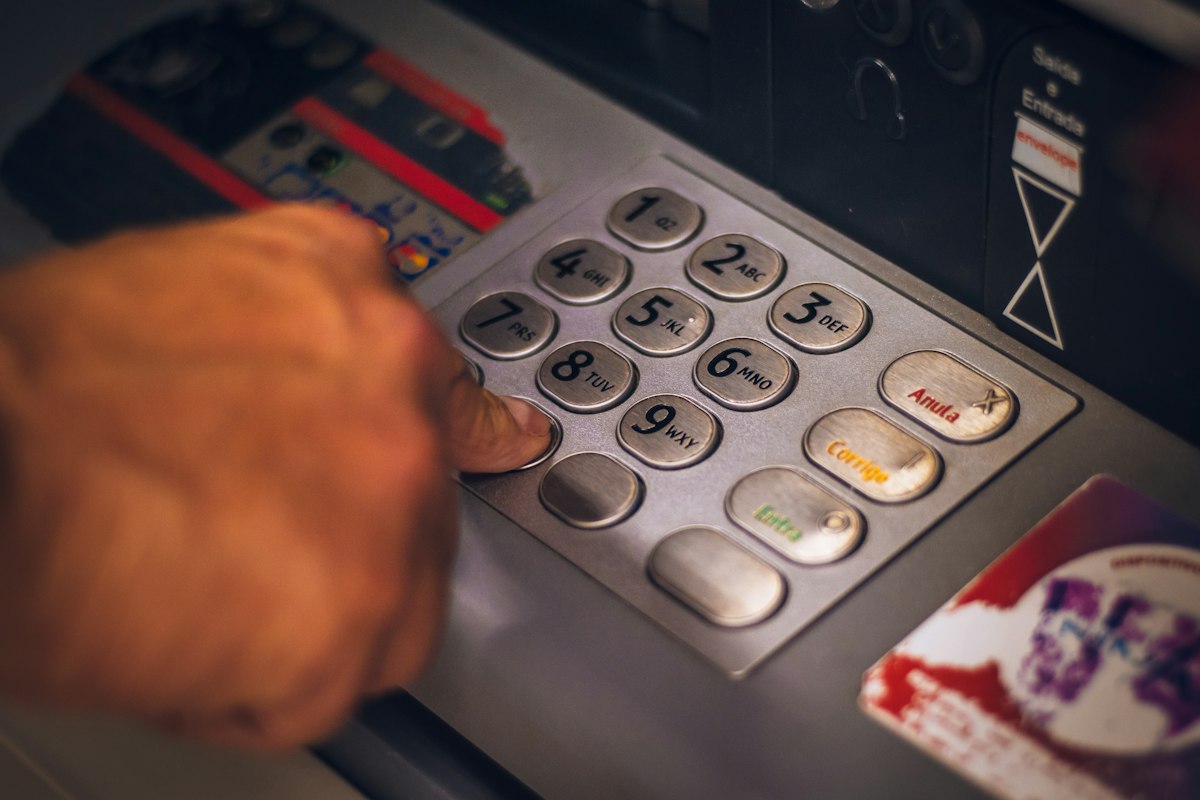
The gap between what Google shows and what your bank charges is not a rounding error. It is a deliberate, legal, and largely invisible profit mechanism — one that costs ordinary people billions every year.
You typed "USD to INR" into Google. The rate said ₹83.50. You walked into your bank and asked to send $2,000. They gave you ₹81.00. Nobody explained the difference. Nobody called it a fee. The money just quietly disappeared — and your bank pocketed ₹5,000 from you without a single line on your receipt. This happens to hundreds of millions of people every day. Here is exactly how it works — and how to stop it.
This is not a conspiracy. It is not even unusual. It happens to migrant workers sending wages home, to freelancers getting paid from abroad, to businesses settling invoices with international suppliers. The mechanism is called the FX spread — and it is perhaps the most profitable financial product that most people have never heard of. Understanding it, and knowing how to work around it, could save you more money per year than almost any other single financial decision you make.
This guide explains exactly how it works, why it is entirely legal, and most importantly, how to use one free tool — FX Rate Live — to reclaim control of every transfer you make from this point forward.
What Google's Exchange Rate Actually Is
When you search "USD to INR" or "GBP to USD" on Google, the number that comes back is called the mid-market rate. It is also known as the interbank rate or spot rate. It is the exact midpoint between the price at which currency buyers are willing to pay and the price at which sellers are willing to accept — in real time, on the global foreign exchange market.
This rate is the same one that Bloomberg terminals display on trading floors. It is what Reuters and the Financial Times publish when covering currency movements. It is what the International Monetary Fund uses in its global economic reports. You can also track it live — updated every few minutes across 150+ currency pairs — at FX Rate Live, completely free.
Here is what makes this rate important: it belongs to no one. It is not set by your bank or the government. It is the collective, real-time verdict of trillions of dollars of currency trading happening every day around the world. It is, in the truest sense, the fair price of money.
What Your Bank Does With That Rate
Your bank knows exactly what the mid-market rate is. Its treasury desk trades at or near that rate all day long when dealing with other financial institutions. But when you — a retail customer — walk in and ask to send money abroad, something changes.
The bank takes the mid-market rate and adjusts it in its favour before presenting it to you. It might be 2% worse. It might be 3.5% worse. For less common currency corridors — say, dollars to Pakistan or Nigeria — it might be 5% or more. This adjusted figure is what they call their "prevailing exchange rate" or "card rate." There is no separate line item that says "FX markup: 3%." The rate is simply presented as fact, and you are expected to accept it or walk away.
According to analysis by Airwallex, 44% of businesses are frustrated by poor exchange rates when making international payments — yet most continue using their banks simply because they do not know the alternative exists. The World Bank Remittance Prices database consistently shows the global average cost of sending $200 hovering above 6% — well above the United Nations target of 3% — with much of that cost buried invisibly inside exchange rates.
Mid-market rate (USD/INR): ₹83.50 — check live at fxratelive.in
Amount you should receive: ₹1,67,000
Bank rate offered (3% spread): ₹81.00
Amount you actually receive: ₹1,62,000
Silent loss: ₹5,000 (~$60) — before any flat fee is even counted
The Real Cost: Three Layers of Hidden Charges
Most people focus entirely on the visible transfer fee — and that is exactly what banks want. The visible fee is the smallest part of the cost, and the part banks actively compete on. The real money is made in the layers beneath it.
Layer One — The FX Spread
This is the gap between the mid-market rate and the rate you are offered. On a $3,000 transfer with a 3.5% spread, that is $105 lost without a single fee appearing on your statement. Major Indian banks like HDFC typically apply a forex markup of 2% to 3.5% above the interbank rate — meaning on a ₹10,00,000 transfer, you could lose ₹20,000 to ₹35,000 in this layer alone. Verify the real rate at FX Rate Live before every transfer to see exactly how wide that gap is today.
Layer Two — The Flat Transfer Fee
"$0 transfer fee!" is a marketing headline designed to distract from the spread. A bank charging $0 flat fee with a 4% exchange rate markup costs dramatically more than a service charging an $8 flat fee with a 0.4% spread. The fee is visible but misleading — always calculate both together.
Layer Three — Correspondent Bank Charges
When your sending bank has no direct relationship with the recipient's bank, the transfer passes through a third "correspondent bank." That intermediary deducts its own charge — typically $15 to $30 — directly from the amount in transit. According to Razorpay's 2026 remittance analysis, SWIFT intermediary fees in the India corridor alone range from ₹500 to ₹2,000 per transaction. The person on the receiving end simply gets less than was sent — with no prior warning from anyone.
FX spread at 3.5%: ~$35
Flat transfer fee: $20
Correspondent bank fee: $15
Total: ~$70 lost — 7% of your money, gone without a single disclosure
→ Check today's live mid-market rate and calculate your own saving
Is This Legal? Why Banks Can Do It
Yes, entirely. There is no law in most countries — including the United States, the United Kingdom, or India — requiring a bank to offer you the mid-market rate or to disclose its exchange rate markup as a separate fee. The bank sets its own "prevailing rate," presents it, and if you accept the transaction, you have legally agreed to the rate offered.
In the European Union, the Revised Payment Services Directive (PSD2) has pushed for greater transparency, requiring some disclosure of the exchange rate applied to transfers. But even there, the markup itself remains perfectly legal — only its disclosure has been regulated. Globally, the Bank for International Settlements has extensively documented how retail exchange rates consistently deviate from interbank rates — the gap is treated as market convention, not misconduct.
The practical implication is straightforward: you cannot wait for regulation to solve this. You have to solve it yourself — and the solution costs nothing and takes under a minute, using the live rate at fxratelive.in as your reference point.
The Maths: What You Lose Every Year
Individual transfers make the numbers feel abstract. Annual totals make them impossible to ignore.
Take a worker sending $500 home every month — a common pattern across South Asian, African, and Latin American migration corridors. At a bank charging 4% combined cost (spread plus fee), that is $20 lost per transfer. Over 12 months: $240 gone. Over five years: $1,200 — enough to pay a child's school term, cover a family emergency, or fund six months of household groceries.
Scale it up. The World Bank estimates remittance flows to low- and middle-income countries reached $685 billion in 2024. If even half that volume passed through high-cost channels with an unnecessary 3% markup, the excess cost to senders globally exceeds $10 billion per year — extracted legally, quietly, and almost entirely without the senders realising what is happening.
$300/month → $144 lost per year
$500/month → $240 lost per year
$1,000/month → $480 lost per year
$2,000/month → $960 lost per year
Switching to a service at 0.5% total cost cuts each figure above by 87.5%
How to Use the Real Rate as Your Weapon
Here is the single most powerful thing you can do before any international transfer: visit FX Rate Live and check the live mid-market rate for your currency pair. Write it down. Then go to your bank or transfer service and get their quoted rate. Calculate the percentage difference. That number — the spread — is your true cost before any fees are added.
This takes 45 seconds. It requires zero financial expertise. And it gives you complete information where previously you had none. Once you can see the gap, you can compare services clearly, negotiate with your bank from a position of knowledge, or simply switch to a provider that charges less. Ignorance is what the fee structure depends on. Information is the only thing that breaks it.
2. Get the rate your bank or transfer service is quoting you
3. Spread % = (mid-market rate − quoted rate) ÷ mid-market rate × 100
4. Add flat fees as a percentage of your transfer amount
5. That total is your real cost — compare across at least two services before confirming
6. Always check the destination amount the recipient will actually receive
A 3% spread does not sound alarming as a percentage. Seeing it as "I am paying ₹4,950 extra on this transfer" is a completely different experience. Framing changes decisions, and the mid-market rate at fxratelive.in is the frame that makes the true cost impossible to ignore — every single time.
Who Comes Closest to the Real Rate?
Not every service charges what banks charge. The growth of specialist digital transfer platforms over the past decade has introduced genuine competition on exchange rate spreads — and the difference in real cost is dramatic.
| Service Type | Typical FX Spread | Flat Fee | Real Cost on $1,000 |
|---|---|---|---|
| High Street Bank | 3%–5% | $15–$30 | $45–$80 |
| Western Union / MoneyGram | 2%–4% | $5–$15 | $25–$55 |
| Specialist Apps (e.g. Wise) | 0%–0.5% | $4–$10 | $4–$15 |
| Other Digital Services | 0.5%–1.5% | Low or zero | $5–$20 |
| Peer-to-Peer FX | Near zero | Small flat fee | $3–$8 |
The gap between the worst and best option on a $1,000 transfer is $70 or more. On a $5,000 transfer, that gap becomes $350. On annual transfers of $12,000, it becomes over $4,000 a year. The key is always to measure effective total cost — not the fee alone, not the rate alone, but both calculated against the live mid-market benchmark at FX Rate Live. That number does not lie, does not negotiate, and does not change based on how it is marketed to you.
Live mid-market rates for 150+ currencies. Free. No signup. No gimmicks.
The Bottom Line
The gap between Google's exchange rate and your bank's exchange rate is not a glitch. It is a feature — one that generates billions in annual revenue for financial institutions at the direct expense of ordinary people sending money home, paying suppliers, or settling bills across borders.
You cannot change how banks are allowed to price their services. But you can change how you respond to that pricing. The mid-market rate is public, it is free, and it is live at FX Rate Live. Knowing it — before every single transfer — transforms you from a passive customer being quietly charged into an informed one who knows exactly what fair looks like and demands nothing less.
Once you see the gap, you cannot unsee it. And once you know how to close it, the only question is why you waited this long.
Frequently Asked Questions
💬 Public Discussion (0)